How I helped reduce the UK’s (radio) carbon footprint

For a long time, Alison Hunter and I have been nursing a "moonshot" project behind the scenes. While much of our work at the BBC Blue Room focuses on internal innovation - the kind of tech that helps the organisation run better - we wanted to find a way to create real-world, lasting environmental impact through something as simple as broadcast energy efficiency.
The Moonshot Idea: Rethinking Broadcast Graphics
It started with a simple conversation. Alison had a spark of an idea: could we fundamentally change the energy footprint of broadcast graphics? It sounds small, but when you consider the scale of the BBC’s reach, the maths becomes staggering. By rethinking the way we design our on-screen graphics, we realised we could reduce power consumption across millions of devices instantly.
The concept is beautifully simple: many modern televisions are "reactive" to the content they display. On certain types of screens, particularly OLEDs, pixels that are dark or black draw significantly less power than bright, white pixels. If we can design our menus, idents, and service graphics to be slightly darker where appropriate, we aren't just changing the aesthetic - we are literally asking less of the television hardware. It’s a "pseudo-dark mode" approach that doesn't sacrifice legibility, but drastically lowers the power draw for those specific elements.
When you apply this to millions of TVs across the country, the cumulative effect is significant. A few darker pixels on a menu might seem negligible, but across the national broadcast landscape, it translates into a massive, tangible energy saving.
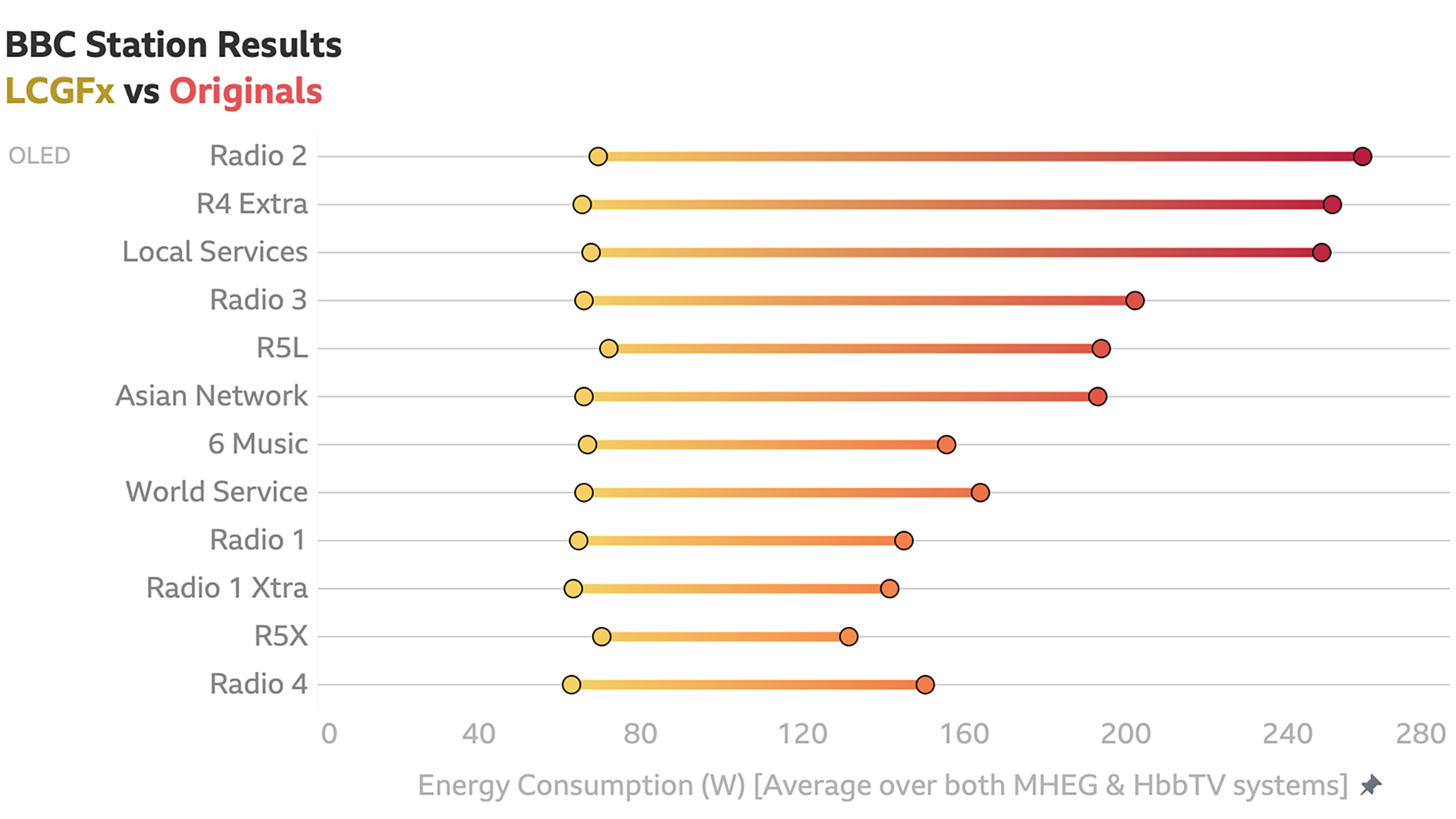
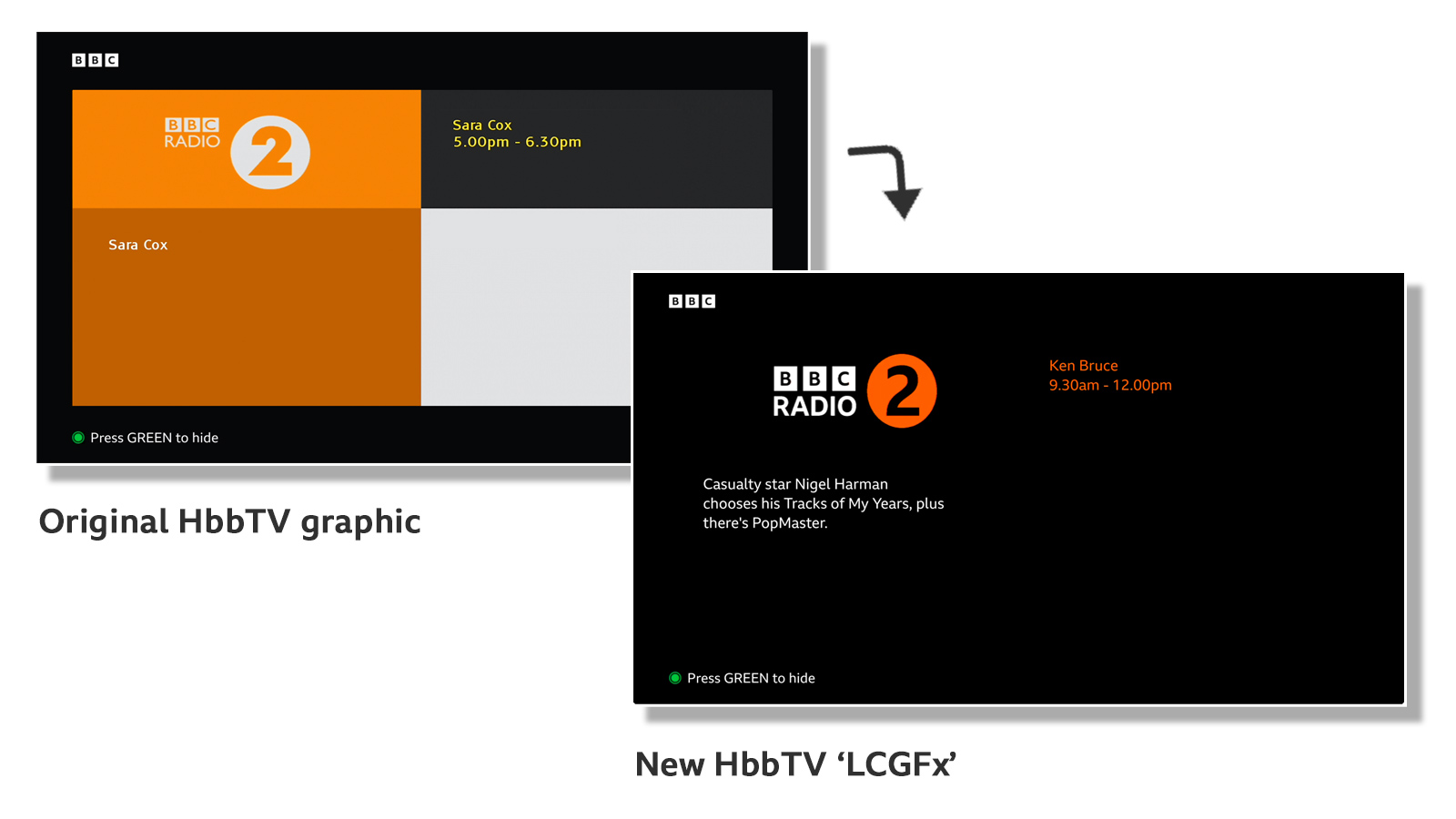
The Impact of Low-Energy Design
I get a genuine, literal thrill of excitement whenever I walk past a screen displaying BBC Radio and see those new, lower-carbon graphics in action. Knowing that the work Alison and I championed has triggered such a tangible, green "knock-on" effect is exactly why we do this job. It is rare to work on something where you can point at a TV screen and know you’ve made it just a little bit kinder to the planet.
While the design impact is what matters most to me, there is a fascinating body of research supporting these findings. If you are interested in the methodology behind our testing or want to see exactly how these design choices scale across different types of television hardware, I’ve detailed the full report over on the official BBC R&D blog.
Read the full technical deep-dive on the BBC R&D website here.